




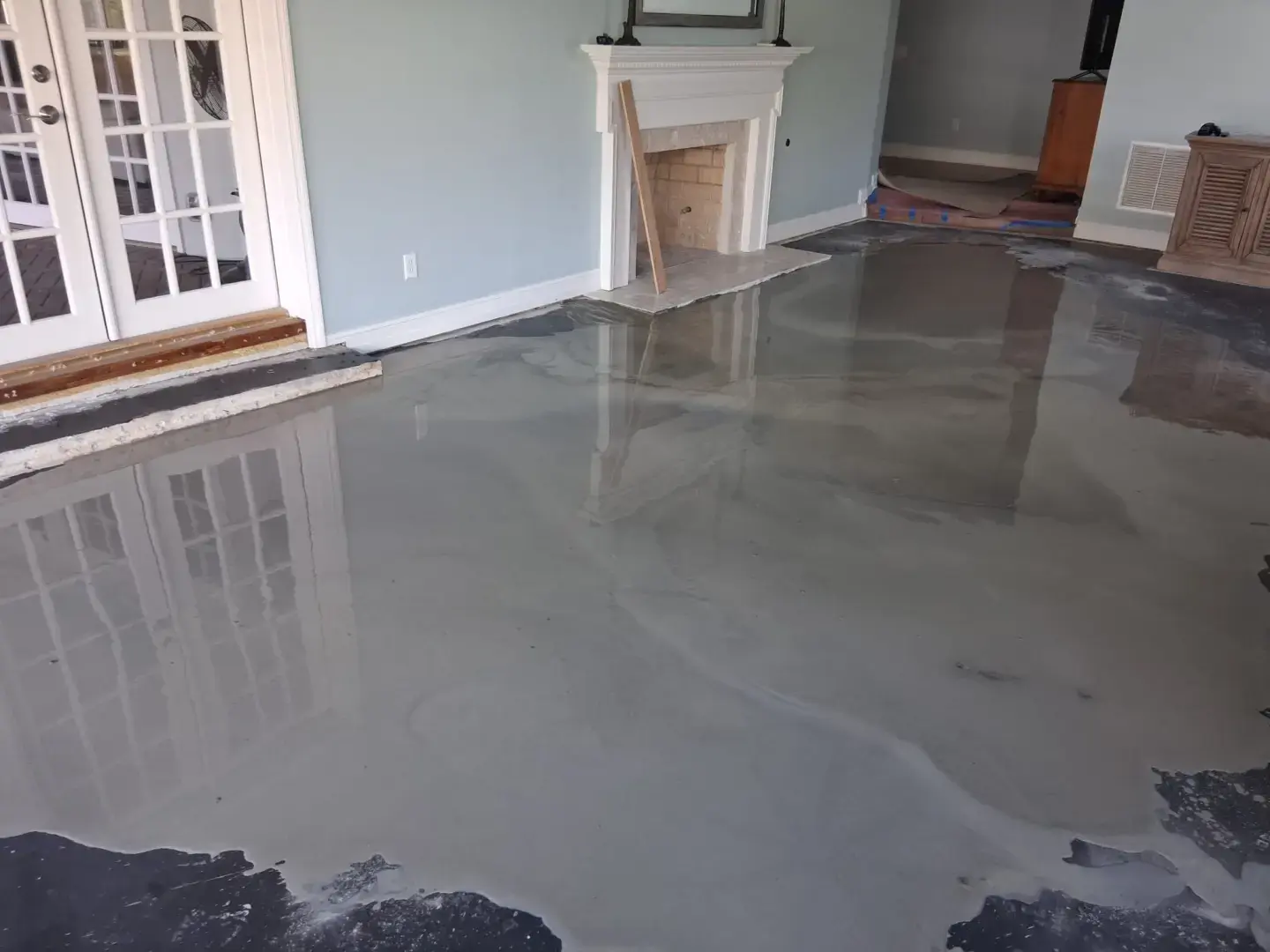
A floor that dips or rocks is more than annoying. It cracks tiles, wears out planks early, and makes furniture wobble in every room. If your slab is not flat, no new floor will sit right on top of it.
Sun Floor Installation does floor leveling across Tampa, FL, so your next floor starts on a solid base. We flatten the slab first, then your tile, vinyl, or wood goes down clean and stays put.
We have leveled floors in older homes with settled slabs and in newer builds with rough pours. Whatever shape your slab is in, we bring it flat so your next floor has a base it can count on. A level floor is easy to take for granted, but you notice the moment one is off.
What Floor Leveling Means
Floor leveling is the work of making your subfloor flat before new flooring goes down. We grind down the high spots and fill the low spots with a self-leveling compound that spreads out and hardens smoothly.
New floors need a flat base to work right. A dip as small as a quarter inch can crack tile or make laminate planks pop apart at the seams. Getting the slab flat first saves you repairs later.
Why Tampa Slabs Get Uneven
Concrete slabs shift over time. Sandy Florida soil moves, water pools under the ground, and slabs settle in spots. Older homes in South Tampa and Ybor City often have slabs that have moved for decades.
Humidity and slab moisture add to the problem, since a damp slab can lift or curl at the edges. We check for moisture and low spots before we level, because a flat slab that is still wet will cause trouble down the road.
Signs You Need Floor Leveling
You can often feel an uneven floor before you see it. Furniture rocks, a marble rolls to one side of the room, and doors stick or swing on their own. You might notice gaps under the baseboards or hollow, bouncy spots when you walk.
Cracked tile and grout lines that keep failing are big clues too. When a floor is not flat, the tile flexes and breaks along the weak points. If any of this sounds like your home, leveling is the fix.
How We Level a Floor
We start by checking the whole floor with a long straightedge to map the high and low areas. Then we grind the high spots down and clean the slab so the leveling compound bonds well.
For low areas, we pour self-leveling underlayment that flows out and settles flat. We give it time to cure, then check it again. Only when the surface passes do we call it ready for your new floor.
Leveling for Different Floor Types
Tile needs the flattest base of all. Even small dips can crack tile or leave lippage, where one tile sits higher than the next. Vinyl and luxury vinyl plank show every low spot, since the thin material follows the slab underneath.
Laminate and floating floors click together, and those clicks fail on an uneven floor. We match the level of flatness to the floor you are installing, so the finished job feels solid underfoot.
What Happens If You Skip Leveling
Skipping the leveling step is one of the most common reasons a new floor fails early. On an uneven slab, tile cracks along the low spots, grout lines break open, and planks flex until the seams pull apart. You end up paying twice, once for the floor and again for the fix.
Many flooring warranties also call for a flat base, so an uneven slab can void your coverage without you knowing. We would rather spend a little time up front getting the slab flat than watch a good floor come apart in a year. Leveling is quiet work that never shows once the new floor is down, but you feel the difference every time you walk across a solid, even room.
Serving Tampa Bay Neighborhoods
Sun Floor Installation levels floors in Tampa, South Tampa, Ybor City, Davis Islands, Westchase, and Town N Country. Older neighborhoods often have settled slabs, while newer builds out west can still have rough or uneven pours.
As a flooring contractor rooted in Tampa Bay, we have seen how local soil and weather affect slabs. That knowledge helps us level your floor once and get it right.
Frequently Asked Questions
How do I know if my floor needs leveling?
Watch for rocking furniture, cracked tiles, gaps under baseboards, and hollow or bouncy spots. If a ball rolls across the room on its own, your slab likely has low spots that need leveling.
How long does floor leveling take?
A single room often levels in a day, plus cure time for the compound. Larger areas take longer. We give you a timeline and let the surface cure fully before we install any new floor.
Can you level a floor before installing tile?
Yes, and tile is the floor that needs it most. A flat slab keeps tile from cracking and stops lippage, where one tile sits higher than the next.
Does slab moisture affect leveling in Tampa?
It can. Florida humidity leaves moisture in slabs, which can lift or curl the edges. We check for moisture before we level so the fix holds up over time.
Ready to Get Started
Tired of a floor that dips or rocks? Call Sun Floor Installation on 813.893.1936 or book online at sunfloorinstallation.com. We will check your slab, give you an honest quote, and get your Tampa floor flat and solid.